
Whoa!
I still remember the first time I held a hardware wallet in my hand and thought: this is weirdly reassuring.
It felt like carrying a tiny Fort Knox that only I could open, and that gut feeling stuck with me.
At first I thought NFTs were just collectible JPEGs, but then I watched a friend lose an entire seasonal collection to a phishing snafu and realized the stakes are very real.
So yeah—this is about art, identity, and money all wrapped together, and about how cold storage using Ledger devices changes the risk picture in plain, useful ways.
Wow!
Most people imagine cold storage as something exotic.
It’s not.
Cold storage simply means keeping your private keys offline, away from constant online threats, though actually there are layers to that simplicity.
My instinct said that moving NFTs offline would be overkill, until I did the math on potential exploit vectors and felt different.
Really?
Okay—let’s be practical.
NFTs carry metadata, smart contract pointers, and often linked content stored off-chain, and that mix creates unique attack surfaces.
Here’s what bugs me about casual storage: wallets that are convenient are online and thus vulnerable, very very vulnerable.
So using a Ledger device for your NFTs shifts the game by keeping signing isolated on a trusted piece of hardware, which materially reduces the chance of a remote compromise.
Hmm…
Initially I thought Ledger was just for coins.
But Ledger devices support a broad array of tokens and can interact with NFT marketplaces through secure signing flows, which surprised me.
I’m biased, but I’ve tested the hardware, the interface, and the recovery workflows, and there are real tradeoffs: convenience versus survivability.
If you care about long-term custody, cold storage with a hardware wallet is the sane baseline, especially when you value your digital provenance.
Seriously?
Yes.
Let me explain the threat model in plain terms.
On one hand, a hot wallet connected to your browser offers lightning-fast trades and lazy copy-paste convenience.
On the other hand, that very connectivity exposes private keys to compromised extensions, clipboard thieves, and tricked signatures—things that Ledger devices are specifically designed to resist.
Here’s the thing.
Ledger hardware isolates signing so that even if your computer is riddled with malware, the device will refuse to approve a transaction unless you physically confirm it.
That matters a lot when a malicious site tries to trick you into signing a transfer of an NFT you didn’t intend to move.
You get a human decision gate.
And while it’s not perfect—nothing is—the human-in-the-loop on-device prompt is one of the most effective mitigations we have.
I’ll be honest—setting up cold storage is a little annoying at first.
You write down your recovery phrase, you test the restore, you maybe wonder if you did it right (I did that, and yeah I rechecked twice).
But that friction is protective friction.
It forces you to slow down and verify addresses, contract details, and the exact terms of a signature, which is the whole point.
Also, it reduces impulse mistakes—those “oops I clicked sign” moments that haunt collectors.
Check this out—
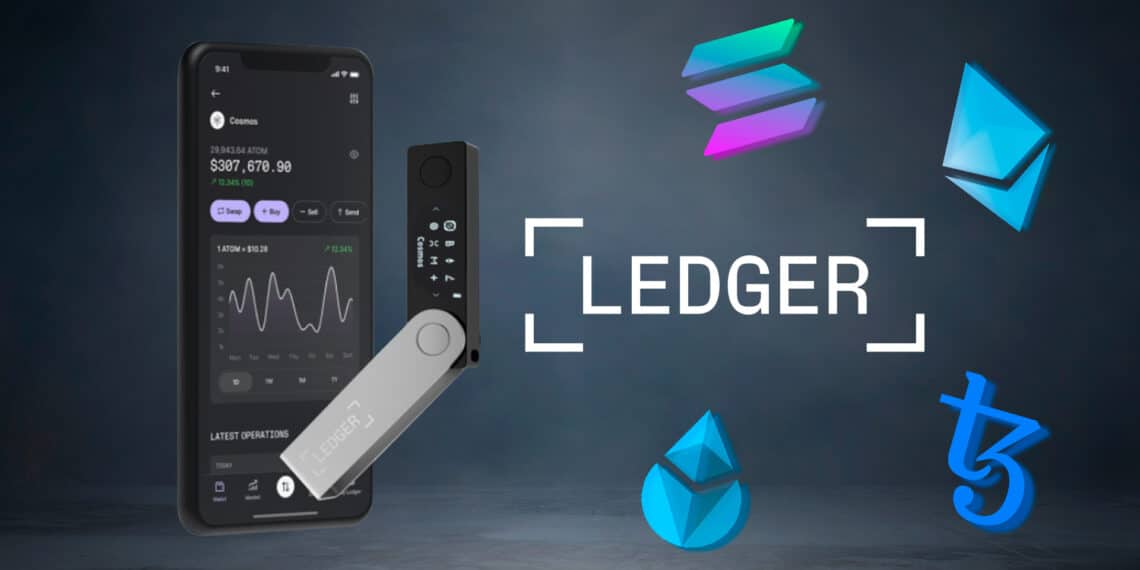
…I started using Ledger with the desktop flows and integrated apps, and the experience improved with practice.
For a more guided experience you can use the companion app, ledger live, which helps manage firmware, accounts, and app installations; it streamlines some of the setup without compromising the core security model.
That single place to see device status and updates removes a lot of guesswork.
But even then, always verify the address shown on the device against what the app displays, because man, UX inconsistencies can be confusing.
If you want to treat NFTs like valuable property, that double-check habit is worth more than any shortcut.
How NFTs Differ From Tokens — And Why That Matters for Cold Storage
NFTs are unique by design.
They often represent a pointer to data off-chain, or a contract that bestows rights, or sometimes just an entry in a ledger with creative metadata.
That uniqueness means the value is concentrated in relatively few items, so a single successful exploit can wipe out years of collection value.
Contrast that with fungible tokens—losing some is bad, but losing a prized NFT can be existential for some collectors, especially artists who depend on provenance for continued royalties.
So guarding the signing process, which is the gateway for transfers and approvals, becomes central to custody strategy.
On one hand, smart contract approvals (like “approve” on ERC-721/ERC-1155) are convenient for marketplaces.
On the other hand, those approvals can be abused if granted too widely, and they persist until revoked.
Ledger devices help by making the signing explicit, though they don’t automatically solve poor contract design or marketplace risks—those still require careful user choices and sometimes using intermediary smart contracts or allowance managers.
I keep a small notebook of common contract addresses I trust and cross-check them, because browser UIs will not do that for you.
Yes it’s a bit nerdy, but it prevents bad surprises.
Whoa.
There are also interesting workflows for long-term custody.
You can set up a multisig that requires multiple hardware wallets across locations, or use a safe deposit box, or split a recovery phrase between trusted parties.
Each approach changes recovery complexity and threat resilience in predictable ways.
For artists who want to ensure future heirs can access collections, combining a hardware wallet with legal estate planning is increasingly common, though the law lags technology here.
Still, better to plan than lose somethin’ valuable to a forgotten password or a burned-out hard drive.
Practical Tips — What I Do and Recommend
First: update your device firmware only from official channels, and verify devices when you first open them.
Second: use a Ledger device for signatures and store the recovery phrase offline in a secure place.
Third: avoid granting blanket approvals to third-party marketplaces; instead, sign per-transaction when possible.
Fourth: consider a multisig for high-value collections—spreading control reduces single-point failures.
Fifth: test your backup recovery at least once on a spare device or a safe simulation so you’re not surprised during a real incident.
I’ll be honest, some collectors resist these steps because they’re comfortable with shortcuts.
That comfort is risky.
If you ever plan to sell, transfer, or prove provenance, having keys controlled by a hardware wallet gives you negotiating power and peace of mind.
And peace of mind has its own market value, even if it’s not on-chain.
FAQ
Can Ledger devices store NFTs directly?
Yes—they store the private keys that control NFTs and can sign the transactions that transfer them.
The NFT metadata usually lives off-chain or in smart contracts, but the hardware wallet protects the key that authorizes movement, which is the critical part.
Do I need ledger live to use a Ledger device?
Not strictly, but ledger live is a helpful companion for firmware updates, app management, and general status checks.
You can interact with NFTs through wallets that integrate with Ledger devices, but it’s wise to keep one trusted management app in your workflow.
What happens if I lose my Ledger?
If you’ve securely recorded your recovery phrase, you can restore access on a new device.
If not, you’re likely out of luck—so protect that phrase like a physical key to a safe deposit box, literally.
Consider splitting recovery in trusted ways or using multisig for very high-value assets.
Alright—I’ll wrap up, not with a neat moral, but with something more honest: security is a practice, not a product.
You can buy the best Ledger device on the market and still get phished if you rush.
So build habits: verify, pause, confirm—every time.
This approach won’t make you immune, but it’ll make your NFTs survivable through the kinds of human errors that cause most losses.
Keep curious, stay skeptical, and protect your keys like you mean it—because one careless click can erase years of collecting and craftsmanship.